
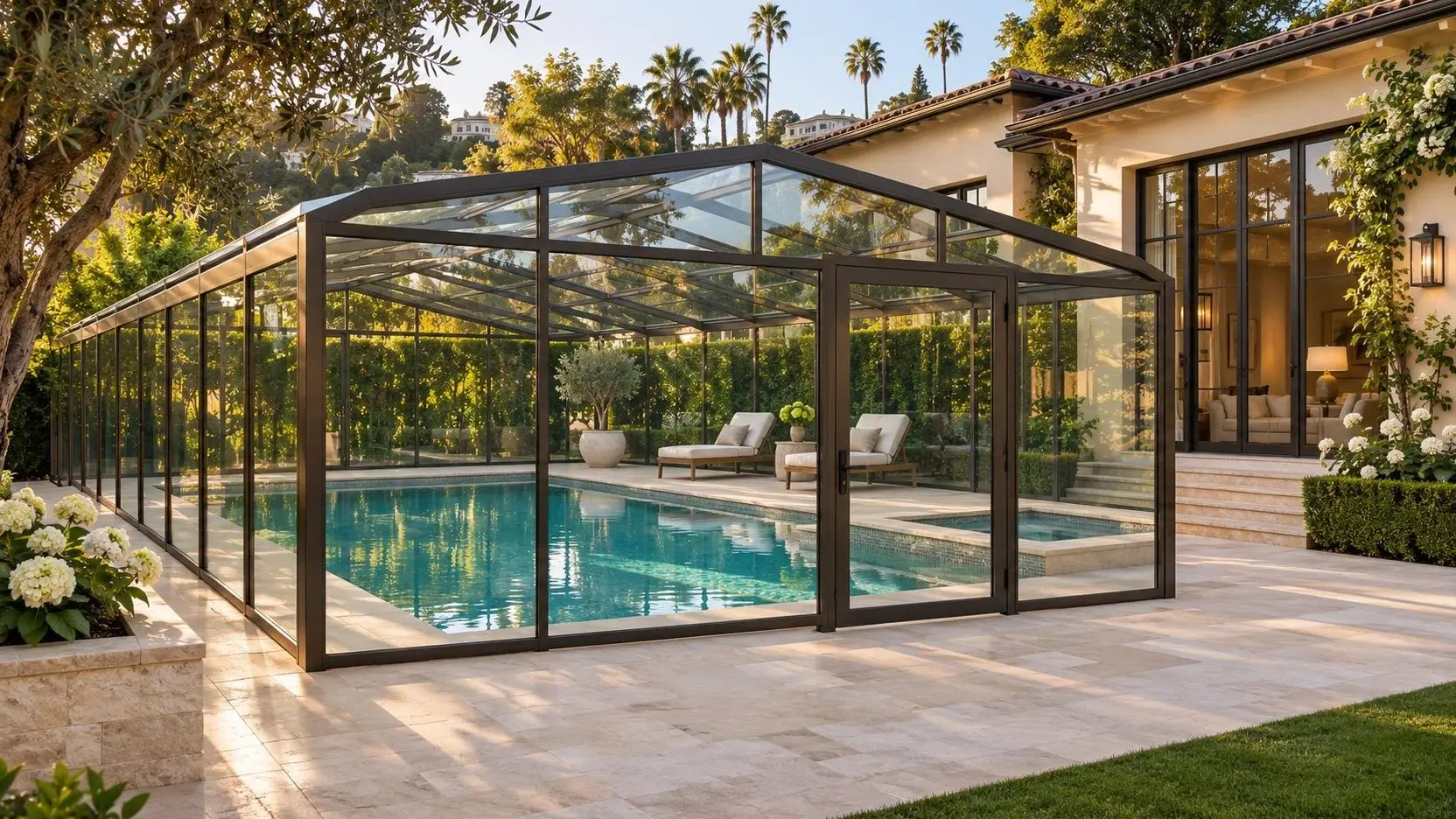
A pool can shape how you use a Beverly Hills home. It may provide a place for exercise, outdoor entertaining, or a quiet afternoon beside the water. During a showing, however, clear water and attractive landscaping reveal only part of the ownership picture. The pool deserves a separate investigation that goes beyond the overall impression of the backyard.
The most useful review connects three things: the pool’s documented history, its present condition, and the routines it will require after the sale. Each answers a different question. Service records can describe past attention without proving current condition. An inspection can identify observations within its scope without guaranteeing future performance. Your own plans determine whether the arrangement fits the way you intend to live.
If you are buying a Beverly Hills home with a pool, use the purchase period to gather that information deliberately. This guide outlines questions to organize with your agent and qualified pool professionals. It is not an equipment inspection, a safety certification, or instructions for making repairs yourself.
Describe the pool you are actually buying
Start with an inventory of the visible features: pool, spa, water features, equipment enclosure, surrounding deck, gates, covers, and controls. Note which features appear connected and which seem independent, then ask the specialist to clarify. A spa beside a pool may share some equipment, but appearances alone will not establish the configuration or service requirements.
Consider how the outdoor area relates to the house. Identify the doors and paths that lead toward the water, the places where equipment can be reached, and the route a service professional would use. Record these observations without attempting to judge whether the arrangement complies with applicable requirements. That determination belongs with the appropriate professionals and authorities.
Michael Hughes’s Beverly Hills neighborhood page can help frame the broader location search. Keep the pool review property-specific. A courtyard pool, a larger garden pool, and a pool on a constrained site can present different maintenance and access questions even within the same neighborhood. The amenities surrounding a home do not establish the condition of its private equipment.
Request records with a clear purpose
Ask for available installation and alteration permits, plans, equipment information, repair invoices, warranties, and recent service records. Identify whether the seller has replaced major components or changed the pool’s configuration. Organize the documents by project and date so that an older installation record is not confused with a later equipment replacement.
When documentation is incomplete, state exactly what is missing. A homeowner may have service invoices but no original plans, or a contractor’s proposal without the associated completion record. Those situations call for different follow-up. Ask the relevant building department about its records process and have a qualified professional explain what the available materials can and cannot establish.
Compare the equipment listed in the records with what is present at the property. Model changes can matter when you are trying to understand service needs or warranty coverage. Do not assume an invoice for a heater proves that the same heater remains installed. Photographs and model information gathered with permission can help the specialist identify discrepancies efficiently.
Define the specialist inspection before it happens
Ask the pool professional what the inspection includes, which equipment can be operated, and what conditions might limit the assessment. Clarify whether leak investigation, electrical evaluation, structural concerns, underground lines, or specialized testing require additional services. A general home inspection and a dedicated pool inspection may have different scopes; neither should be assumed to include every possible test.
Arrange authorized access and ask what preparation is needed. The seller or service provider may need to make controls available or explain a particular operating sequence. Do not experiment with unfamiliar equipment during a showing. If part of the system cannot be evaluated, request that the report identify the limitation and explain the appropriate next step.
Afterward, distinguish observations from conclusions and recommendations. A specialist may identify a symptom and recommend another trade to investigate its cause. Treat that recommendation as an open question rather than rewriting it as a confirmed diagnosis. Ask for plain-language explanations of the findings that could affect immediate use, expected expense, or the feasibility of your intended plans.
Ask what the report leaves unresolved
A useful follow-up conversation includes what was not visible or tested. If the inspection occurred while a feature was disconnected, the report should not become evidence that the feature works. Record the missing evaluation separately and decide, with your advisers, whether additional access or testing is needed before you make the relevant purchase decision.
Review water access and safety measures professionally
The U.S. Consumer Product Safety Commission’s Pool Safely guidance emphasizes layers of protection, including barriers, appropriate equipment, and active supervision. These measures work together; an appealing pool design or a single device should not be treated as a complete safety strategy. Ask qualified professionals to review the actual barriers, gates, covers, alarms, and drain-related equipment present at the home.
Have the inspector distinguish an observed feature from a conclusion about applicable requirements. A gate that appears to close during a brief visit is not a complete assessment of the pool enclosure. Similarly, a cover visible in a photograph does not establish its type, condition, compatibility, or proper operation. Request model-specific explanations and any recommended follow-up.
Think through your own use without relying on the seller’s routine. How would you manage guests, supervise pool use, and control access while gardening or entertaining? Where would instructions and emergency information be kept? These are practical planning questions to address alongside professional review. They do not replace training, supervision, or advice tailored to the household and property.
Separate appearance from maintenance condition
A recently cleaned pool can look inviting while still needing equipment service. Conversely, cosmetic wear does not by itself describe the condition of the entire installation. Ask the specialist to separate surface appearance, operational findings, and potential underlying concerns. This makes the report more useful than a single overall judgment about whether the pool is good.
For decking, adjacent walls, drainage, and landscaping, ask which observations belong within the pool specialist’s scope and which need another professional. The relationship between the pool and surrounding site matters, especially where access is constrained. Avoid assuming that a repair recommendation for one surface establishes a cause or solution for a different part of the property.
If a renovation is central to your purchase, describe it precisely. Replacing a finish, changing equipment, altering dimensions, and moving a pool are different projects. Ask the appropriate design and construction professionals about feasibility and permitting for your proposed scope. An attractive inspiration photograph should remain a design preference until the property-specific constraints have been evaluated.
Develop a maintenance plan you can actually use
Ask a qualified service provider to explain the routine work appropriate for the installed system and provide a property-specific proposal. Clarify which visits, materials, cleaning tasks, and equipment checks are included. Identify what would be billed separately and who responds if equipment stops working between scheduled visits. A quoted service amount is difficult to interpret without those details.
Discuss how the pool will be used. Frequent entertaining, extended travel, or occasional spa use may influence the questions you ask about scheduling and oversight. You do not need a universal monthly cost estimate from a lifestyle article. You need a defined service proposal, utility information where available, and a realistic understanding of responsibilities that remain with the owner.
Buyers comparing Beverly Hills with Bel Air or Brentwood should apply the same level of inquiry to each property without assuming the pools are interchangeable. Michael’s Greater Los Angeles community overview can help organize the location comparison. Maintain a separate pool worksheet for each home, including equipment, inspection findings, open items, and the maintenance arrangement you would need.
Turn findings into clear transaction questions
Review significant findings with your agent and the relevant specialists before deciding how to respond. If you request a repair, identify the specific issue and the documentation you expect afterward. A broad request to service the pool may be interpreted differently by the parties. A clear written scope is easier to evaluate at the final review.
If a credit is discussed, do not assume it establishes the full cost or feasibility of later work. Ask for appropriate proposals and consider whether access, parts, approvals, or related repairs remain uncertain. Your contract and professional advice should guide any negotiated arrangement. The goal is to understand what you are accepting, not to convert every observation into a predetermined negotiation demand.
Keep the condition review aligned with your contractual deadlines. A requested specialist visit does not automatically extend your review rights. Ask your agent how the scheduling and information gaps affect the decisions due under your actual agreement. When an important question remains unresolved, identify it explicitly rather than allowing it to disappear inside a general inspection summary.
Plan the handoff before closing
Prepare a handoff list covering manuals, equipment identifiers, transferable service information, access arrangements, and any agreed repairs. Request an authorized demonstration of the controls from someone qualified to explain them. If a feature depends on an app or subscription, confirm the ownership-transfer process without accepting the seller’s personal login as the permanent solution.
Confirm who will maintain the pool between your last inspection and possession, and how any newly observed issue will be communicated. At the final property review, compare the agreed work and included equipment with the written arrangement. This is a focused confirmation step, not a replacement for the earlier technical inspections or a new guarantee of condition.
A well-reviewed pool can become an informed part of your Beverly Hills home choice. The essential work is to replace visual assumptions with records, professional findings, and an understandable maintenance plan. When you know what is installed, what remains uncertain, and who will support the system after purchase, you can assess the backyard as an ownership responsibility as well as an amenity.
FAQs
Does a general home inspection cover everything about a pool?
Not necessarily. Ask the inspector about the written scope and arrange specialist services for important questions outside it. Do not assume leak testing or every equipment evaluation is included.
Can I rely on the seller’s pool service company’s records?
The records are useful history, but they do not replace an independent review of current condition. Confirm what each invoice or service note actually documents.
Should I estimate repair costs from online averages?
Use property-specific professional proposals for decisions that depend on cost. Online averages may omit access, equipment differences, permitting, or related work.
Contact Michael Hughes
Looking for a Beverly Hills home with outdoor space that fits your plans? Contact Michael Hughes at 424-303-8673 to discuss your search and coordinate the right property questions.
Source
U.S. Consumer Product Safety Commission: Pool Safely safety tips. Referenced for general layers-of-protection guidance, not a property-specific compliance determination.

