
West Hollywood
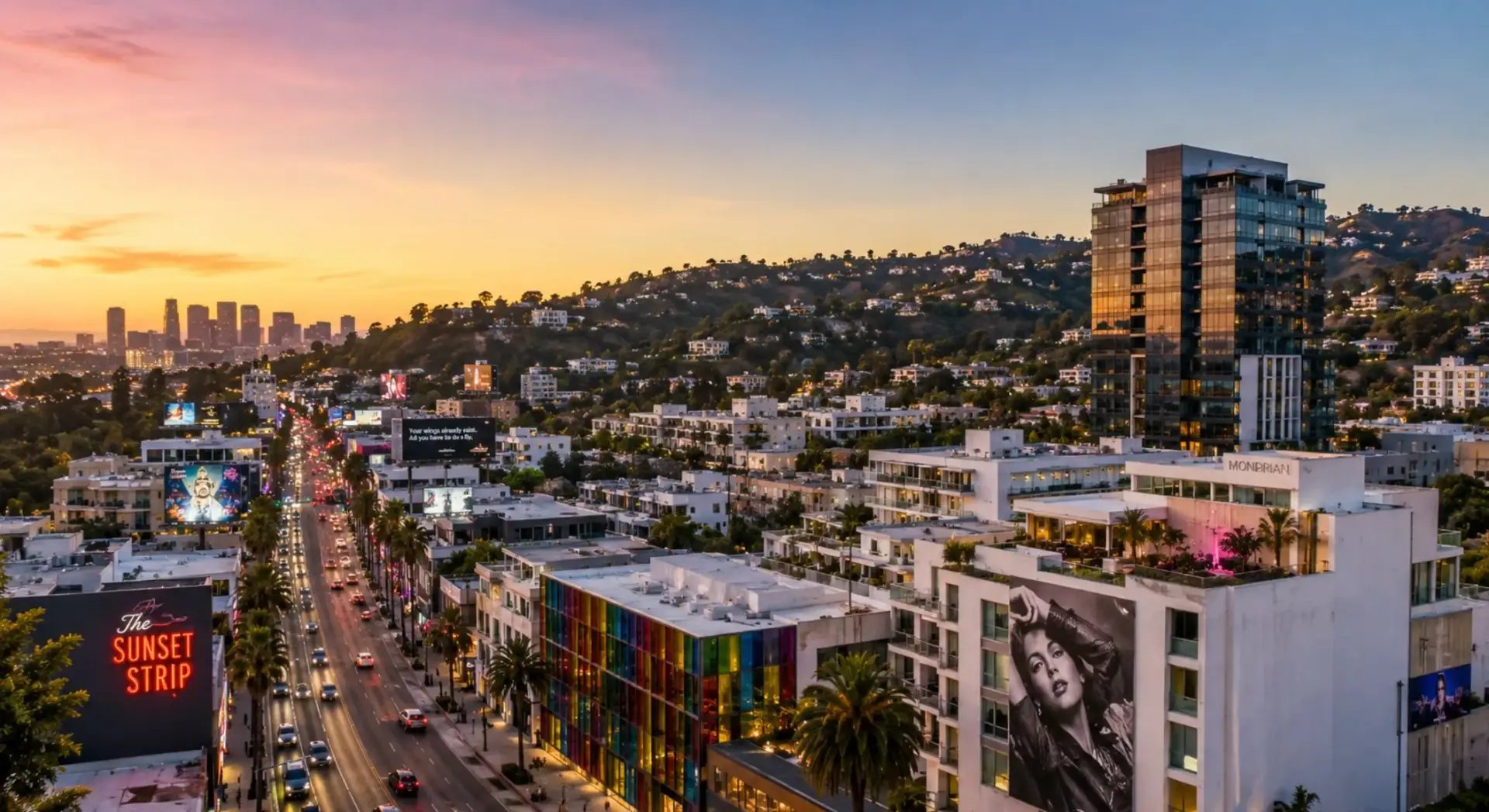
About West Hollywood, CA
Compact, energetic, and unmistakably Los Angeles, West Hollywood brings together residential living, architecture, fashion, dining, nightlife, and design within one of the city’s most connected communities.
Covering approximately 1.9 square miles, West Hollywood sits between Beverly Hills and Hollywood with convenient access to many of Los Angeles’ most sought-after destinations. Despite its small footprint, the city has several distinct districts, including the legendary Sunset Strip, the West Hollywood Design District, the Rainbow District, and the Santa Monica Boulevard corridor.
Tree-lined residential streets sit just moments from acclaimed restaurants, boutiques, design showrooms, hotels, entertainment venues, and neighborhood parks. The result is a lifestyle that feels distinctly urban while still offering pockets of privacy and residential character.
For buyers looking for architecture, convenience, walkability, and access to the best of central Los Angeles, West Hollywood offers a compelling place to call home.
West Hollywood Real Estate Market
West Hollywood real estate reflects the diversity of the city itself.
The market includes contemporary condominiums, luxury residences, townhomes, mid-century buildings, Spanish and traditional homes, architectural properties, and newer developments with elevated amenities. Individual streets can feel dramatically different depending on their proximity to Sunset Boulevard, Santa Monica Boulevard, the Design District, or quieter residential pockets.
The U.S. Census Bureau reports a median value of approximately $924,800 for owner-occupied housing units based on 2020–2024 data. Because West Hollywood contains such a varied mix of property types, individual values can differ significantly based on location, architecture, size, condition, views, parking, amenities, and building characteristics.
In a market this nuanced, understanding the property itself is only part of the equation. Michael Hughes brings more than 25 years of real estate experience to helping buyers and sellers evaluate value, opportunity, and strategy with a more informed perspective.
What to Love
- Central Los Angeles Location: Beverly Hills, Hollywood, Century City, the Hollywood Hills, and much of central LA are within easy reach.
- Walkable Urban Lifestyle: Restaurants, coffee shops, boutiques, fitness studios, nightlife, and everyday conveniences are woven throughout the community.
- Design and Architecture: From historic apartment buildings and mid-century residences to contemporary homes and luxury condominiums, West Hollywood has a strong visual identity.
- Dining and Entertainment: Some of Los Angeles’ most recognizable restaurants, hotels, music venues, and nightlife destinations are located within the city.
- Distinct Neighborhood Experiences: The Sunset Strip, Design District, Rainbow District, and Santa Monica Boulevard each bring a different energy to West Hollywood.
Local Lifestyle
West Hollywood is designed around access.
Residents can move easily between quiet residential streets and some of Los Angeles’ most active dining, shopping, entertainment, and design districts. Its compact layout also makes it one of Southern California’s more walkable urban communities.
Mornings might begin at a neighborhood café, fitness studio, or one of the city’s parks before moving into a day of work, shopping, or meetings nearby. West Hollywood Park and Plummer Park serve as two of the city’s primary recreational and community spaces, offering green space and a variety of public facilities and programming.
By evening, the city takes on another personality. Restaurants, rooftop spaces, music venues, hotels, and nightlife line its major corridors, while residential streets remain tucked just beyond the activity.
For many residents, that balance is part of West Hollywood’s appeal: the energy of Los Angeles is close at hand without having to travel far to experience it.
Dining, Entertainment & Shopping
West Hollywood has established itself as one of Los Angeles’ most influential destinations for food, nightlife, fashion, and design.
The West Hollywood Design District, centered around Melrose Avenue, Beverly Boulevard, Robertson Boulevard, and the Pacific Design Center, brings together luxury design showrooms, galleries, boutiques, restaurants, and creative businesses. The district features more than 200 storefronts and remains one of the city’s defining destinations for architecture and interiors.
Along Sunset Boulevard, the Sunset Strip combines generations of entertainment history with contemporary hotels, restaurants, rooftop destinations, music venues, and nightlife. The approximately 1.6-mile corridor has played a significant role in Los Angeles music and entertainment culture for decades.
Meanwhile, Santa Monica Boulevard offers another layer of neighborhood restaurants, nightlife, local businesses, and community destinations.
Together, these districts make West Hollywood a place where dining, entertainment, design, and everyday life are closely connected.
Things to Do
West Hollywood’s compact size puts many of its best-known destinations only minutes apart.
Explore the Sunset Strip
Discover the West Hollywood Design District
Visit West Hollywood Park
Spend Time at Plummer Park
Walk Santa Monica Boulevard
Schools
West Hollywood Elementary School
Located on Hammond Street, West Hollywood Elementary is an LAUSD elementary school serving students from kindergarten through fifth grade and operates as a School for Advanced Studies.
Because attendance boundaries and school assignments can vary by property, buyers should confirm current information directly with LAUSD before making a housing decision based on a specific school.
The surrounding Los Angeles area also provides access to a variety of private and independent educational options.
Overview for West Hollywood, California
West Hollywood combines a dense urban environment with an unusually strong concentration of residential neighborhoods, entertainment, hospitality, retail, and creative industries.
The U.S. Census Bureau estimates the city’s population at approximately 34,231 residents in 2025, with a land area of about 1.89 square miles. Recent American Community Survey data reports a median age of approximately 40 years and median household income of $96,995.
Featured Areas
