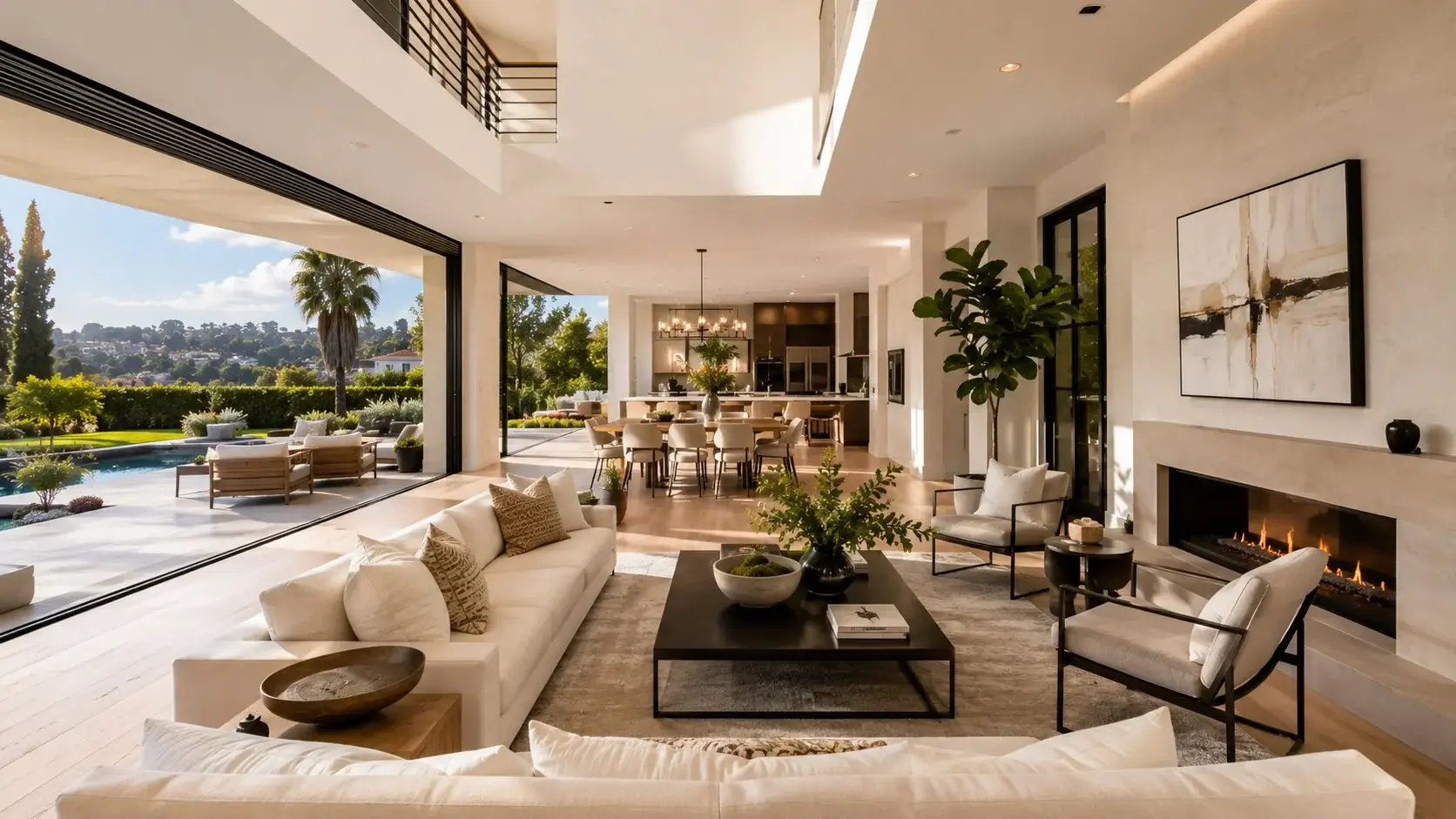
Selling a luxury property requires a different level of preparation than putting a typical home on the market. Affluent buyers are often evaluating far more than square footage, finishes, and bedroom count. They may consider architecture, privacy, views, condition, outdoor living, technology, security, location, and the overall experience the property provides.
For homeowners considering selling a luxury home in Los Angeles, preparation can have a significant effect on how buyers perceive the property from the moment they first see it online to the moment they walk through the door.
Luxury does not necessarily mean that every surface needs to be replaced or every room remodeled. In many cases, the strongest preparation strategy is to identify what makes the home desirable, remove distractions, address visible maintenance issues, and present the property in a way that helps qualified buyers understand its value.
Los Angeles also contains many different luxury markets. A contemporary Hollywood Hills residence with panoramic views may require a different presentation strategy from a traditional Beverly Hills estate or a coastal property on the Westside. The goal is not to make every home look the same. It is to position the property appropriately for its architecture, location, price range, and likely buyer.
Prepare the Property Before It Reaches the Market
The best time to identify presentation problems is before photography and buyer showings begin. Once a property launches, buyers start forming opinions immediately, and changing that first impression can be difficult.
Begin With an Objective Walk-Through
Owners naturally become accustomed to their homes. Small imperfections that disappear into everyday life can stand out immediately to a buyer seeing the property for the first time.
Walk through the home with your real estate professional and evaluate it from the perspective of someone considering a major purchase. Pay particular attention to the entrance, landscaping, paint, flooring, lighting, windows, cabinetry, bathrooms, kitchens, outdoor spaces, and visible maintenance concerns.
The objective is not to create a flawless property. Instead, address issues that could distract buyers from the home’s strongest features or suggest that maintenance has been deferred.
For example, a damaged fixture may be inexpensive to replace, but leaving it unrepaired can cause a buyer to wonder what else has been neglected.
Complete Repairs Before Cosmetic Improvements
It can be tempting to focus immediately on staging and design, but maintenance should usually come first.
Prioritize items that affect the home’s condition, operation, or overall presentation. Doors should open properly, lighting should work, plumbing fixtures should function as expected, and visible damage should be addressed when practical.
For luxury properties with more sophisticated systems, sellers may also want to review pools, gates, security equipment, smart-home technology, elevators, HVAC systems, exterior lighting, and irrigation before showings begin.
A buyer purchasing at the luxury level may expect these systems to function smoothly.
Decide Which Updates Are Worth the Investment
Not every home needs a major renovation before listing.
Some updates can meaningfully improve presentation without requiring substantial construction:
- Fresh paint: Neutral, cohesive colors can make interiors feel brighter and better maintained while reducing distractions from heavily personalized finishes.
- Updated lighting: Replacing dated or mismatched fixtures can modernize a room and improve how the property photographs.
- Landscape improvements: Trimming vegetation, refreshing plantings, cleaning hardscape, and improving exterior lighting can create a stronger arrival experience.
- Minor repairs: Addressing worn hardware, damaged surfaces, or visible maintenance issues helps reinforce the impression that the property has been cared for.
Large renovations should be considered more carefully. A seller may spend heavily on a new kitchen only to discover that the eventual buyer plans to replace it according to personal preferences.
Before investing in major work, evaluate whether the improvement is likely to change the property’s market position enough to justify the cost and time involved.
Position the Home for Luxury Buyers
Once the property is in good physical condition, the next step is creating a presentation that supports its value.
When selling a luxury home in Los Angeles, the goal is not simply to make the home attractive. It is to communicate a lifestyle and help buyers understand why the property deserves consideration compared with other luxury listings.
Create a Strong First Impression
Luxury buyers often begin their search online, but the in-person arrival experience remains important.
The driveway, gate, landscaping, front entrance, lighting, and exterior condition all contribute to the buyer’s first impression. A home may have spectacular interiors, but an unkempt entrance can create doubt before the showing begins.
Outdoor areas should receive equal attention. Pools should be clean, furniture should be arranged intentionally, landscaping should appear maintained, and entertaining areas should feel usable.
In Los Angeles, where indoor-outdoor living can be a major selling point, exterior spaces are often part of the home’s primary value proposition.
Declutter Without Removing Personality
A luxury home does not need to feel empty to show well.
The goal of decluttering is to reduce visual competition so buyers can appreciate architecture, room proportions, views, and finishes.
Personal collections, excessive furniture, crowded countertops, and highly specific décor can make rooms feel smaller or prevent buyers from imagining their own belongings in the space.
At the same time, removing too much can make a large property feel cold.
The strongest presentation often strikes a balance: polished and aspirational, but still comfortable enough to suggest how the home can be lived in.
Use Staging Strategically
Professional staging can be particularly effective when a property is vacant, has an unusual floor plan, or needs an updated visual identity.
Large spaces can be difficult for buyers to interpret without furniture. Staging demonstrates scale and helps establish the intended function of each area.
The design should also respect the architecture.
A Mid-Century Modern residence may benefit from clean lines and carefully selected furnishings, while a traditional estate may require a softer and more formal approach. Trying to force a trendy aesthetic onto a home with a different architectural identity can make the presentation feel inconsistent.
Highlight the Features Luxury Buyers Care About
Every luxury home should have a clear value story.
Instead of attempting to make every feature equally important, identify the property’s strongest differentiators. These might include privacy, views, architectural significance, a flat lot, extensive grounds, recently completed renovations, a guest house, entertaining spaces, a pool, or proximity to important Los Angeles destinations.
Marketing and staging should reinforce those strengths.
If the primary selling point is a panoramic view, furniture and window treatments should not block it. If outdoor living is central to the property, patios and pool areas should feel ready to use rather than unfinished or overlooked.
Price, Photograph, and Market the Home Effectively
Preparation and marketing should work together. Even an exceptional property can struggle if the price or presentation does not align with buyer expectations.
Establish a Market-Based Price
Pricing luxury real estate can be challenging because there may be relatively few directly comparable properties.
Price per square foot can provide context, but it should not be the only measure used.
A thoughtful pricing analysis should consider location, street position, lot size, privacy, views, architecture, condition, renovation quality, amenities, recent comparable sales, and current competing listings.
Sellers should also separate emotional value from market value. The amount spent on improvements or the personal importance of the property does not necessarily determine what a buyer will pay.
Overpricing can reduce early momentum and cause qualified buyers to overlook the home. The goal should be to establish a price that supports the property’s unique value while remaining credible within the current market.
Invest in Professional Photography
Photography is one of the most important marketing tools for a luxury listing.
High-quality images should communicate scale, natural light, architecture, finishes, outdoor spaces, and the relationship between the home and its surroundings.
Depending on the property, additional marketing may include video, aerial imagery, floor plans, virtual tours, editorial-style brochures, or a dedicated property website.
Each format should have a purpose. Aerial photography may be useful for showing lot size and privacy, while video can demonstrate the flow between indoor and outdoor spaces more effectively than still images alone.
Write Property Descriptions With Substance
Luxury listing copy often becomes overloaded with words such as “spectacular,” “exclusive,” and “one-of-a-kind.”
Specific details are usually more useful.
Rather than simply describing a home as exceptional, explain what makes it exceptional. Describe the architecture, materials, views, privacy, renovation history, floor plan, entertaining areas, landscaping, or lifestyle advantages.
Clear information helps buyers understand why the property is different from competing listings.
Prepare for Private Showings
A luxury showing should feel organized and effortless.
Before buyers arrive, adjust lighting, window coverings, temperature, and outdoor presentation. Remove clutter, secure sensitive personal items, and make sure important spaces are accessible.
For privacy-conscious sellers, showing procedures may also include buyer qualification and careful management of property information.
The goal is to create enough structure to protect the seller while allowing serious buyers to experience the home comfortably.
FAQs About Selling a Luxury Home in Los Angeles
What Should I Do First Before Selling a Luxury Home in Los Angeles?
Start with an objective assessment of the home’s condition, presentation, and market position. Identify necessary repairs, maintenance concerns, cosmetic improvements, staging needs, and the features that make the property distinctive before professional photography or marketing begins.
Should I Renovate My Luxury Home Before Selling?
Major renovations are not always necessary because luxury buyers often have their own design preferences. Sellers may benefit more from targeted improvements such as paint, lighting, landscaping, repairs, and staging unless a larger renovation would clearly improve the property’s market position enough to justify the cost.
Is Staging Worth It for a Luxury Home?
Staging can be valuable when it helps buyers understand scale, function, and lifestyle, particularly in vacant properties or homes with unusual layouts. Effective luxury staging should complement the architecture, highlight important features, and create an aspirational environment without overwhelming the property itself.
How Do I Price a Luxury Home in Los Angeles?
Luxury home pricing should consider recent comparable sales, current competition, location, lot characteristics, views, privacy, architecture, renovations, amenities, and overall condition. Price per square foot can be useful as one reference point, but unique properties usually require a more detailed, property-specific analysis.
How Can I Attract Qualified Luxury Buyers?
Professional presentation, accurate pricing, high-quality photography, targeted marketing, compelling property descriptions, agent-to-agent outreach, and carefully managed private showings can help reach qualified buyers. The most effective strategy should be customized to the property’s location, price point, architecture, and likely buyer profile.
Ready to Sell Your Luxury Home in Los Angeles?
If you are considering selling a luxury home in Los Angeles, a property-specific strategy can help you determine which improvements are worthwhile, how to position the home, and how to present it to qualified buyers.
Contact us today for a confidential consultation and customized plan for preparing, pricing, and marketing your Los Angeles luxury property for the strongest possible result.